Pérez A, Ruiz L, Batres S, Ferreras R, Pinto C, Yagüe B, Pérez MI, Sacristán S, Ruz I, Páez SC, Sanchez I, González VM, Alcalá S, Martín ME, Sainz BJR. Aptamer-based inhibition of MNK1 reduces pancreatic ductal adenocarcinoma growth by targeting cancer stem cells
J. Biomed. Sci. 2026
"A DNA aptamer opens a promising new route to target the cells that drive pancreatic cancer." - Drs Sonia Alcalá, Mª Elena Martín y Bruno Sainz
Summary:
Background: Pancreatic ductal adenocarcinoma (PDAC) remains one of the deadliest cancers due to late diagnosis, early metastasis and resistance to therapy. Cancer stem cells (CSCs) have been implicated in PDAC aggressiveness and treatment failure. MAP kinase-interacting kinase 1 (MNK1) is overexpressed in PDAC and plays a critical role in tumor progression and CSC maintenance. Here, we show the potential of apMNKQ2, a DNA aptamer targeting MNK1, to therapeutically target CSCs and reduce PDAC tumor burden in patient-derived xenografts (PDXs).
Methods: PDX cell lines and in vivo mouse models were used to assess the effects of apMNKQ2 on cell viability, apoptosis, cell cycle progression, migration, epithelial-to-mesenchymal transition (EMT) and CSC properties. Functional CSC targeting was validated through clonogenic and self-renewal assays as well as extreme limiting dilution analysis. Systemic administration of free apMNKQ2 was tested for biodistribution, pharmacokinetics, toxicity, and antitumor efficacy at escalating doses.
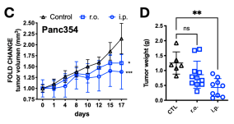
Results: apMNKQ2 downregulated MNK1 and anti-apoptotic proteins (MCL1, XIAP), impaired cell proliferation, induced apoptosis, and disrupted cell cycle progression in PDX PDAC cells. Importantly, apMNKQ2 also inhibited migration, mesenchymal properties and angiogenesis in vitro, and lung colonization in vivo. Notably, apMNKQ2 strongly targeted PDAC CSCs, reducing CD24, CD133, CXCR4 and ALDH expression, clonogenicity and in vivo tumor initiation over 600-fold. Free apMNKQ2 (without transfection agents) entered PDAC cells efficiently, retaining anti-CSC activity. Systemic delivery of free apMNKQ2 accumulated in tumors, was well tolerated up to 400 mg/kg and showed no toxicity. Importantly, 10 mg/kg of apMNKQ2 produced strong antitumor effects in PDX models. Increasing the dose 20-fold enhanced tumor uptake but not efficacy, suggesting a therapeutic plateau at 10 mg/kg.
Conclusions: MNK1 plays a central role in PDAC progression and CSC maintenance. apMNKQ2 is a potent anti-MNK1 DNA aptamer with robust preclinical activity, including CSC-targeting and anti-invasive effects. Its low toxicity, systemic bioavailability, and efficacy at low doses support further development as a novel therapeutic strategy for PDAC.
Why do you highligth this publication?
We highlight this study because pancreatic cancer urgently needs new therapeutic approaches. Our DNA aptamer apMNKQ2 targets MNK1 and reduces the activity of cancer stem cells, which are linked to tumour resistance and recurrence. In patient-derived models, it significantly impaired tumour initiation and reduced tumour growth in mice. The aptamer also reached tumours after systemic administration without a delivery vehicle and was well tolerated in preclinical testing. These promising findings warrant further investigation as a possible treatment for PDAC.
Publication commented by:
Drs Sonia Alcalá, Mª Elena Martín and Bruno Sainz
Biomarkers and Personalized Approach to Cancer Group (BioPAC) group, Aptameros group & Microscopy, histology and comparative pathology unit. IRYCIS