
Lung cancer translational research
The Lung Cancer Translational Research Group (GITCaP) is dedicated to the research and treatment of thoracic tumors, with a multidisciplinary team of oncologists, surgeons, pathologists, radiologists, pulmonologists and other specialists. Their lines of research focus on identifying predictive markers of treatment efficacy and improving patient survival and quality of life. In addition, they collaborate in clinical trials and projects on microbiota, blood biomarkers, cancer in non-smokers and the impact of radon. They also investigate the use of artificial intelligence in radiology and the promotion of physical exercise to reduce inflammation.
Collaborating Staff
- María Eugenia Olmedo García
- Yolanda Lage Alfranca
- Miguel García Pardo de Santayana
- Margaret Lario Martínez
- Alberto Cabañero Sánchez
- Rosa Mariela Mirambeaux Villalona
- Paola Lucía Arrieta Narváez
- Luis Gorospe Sarasúa
- José Javier Alarcón Rodríguez
- Patricia Paredes Rodriguez
- Gemma María Muñoz Molina
- Amparo Benito Berlinches
- Jesús Chamorro Pérez
- Natalia Isabel Torres Calcines
- Isabel Lourdes Hernández Pérez
- Beatriz Samper Pérez
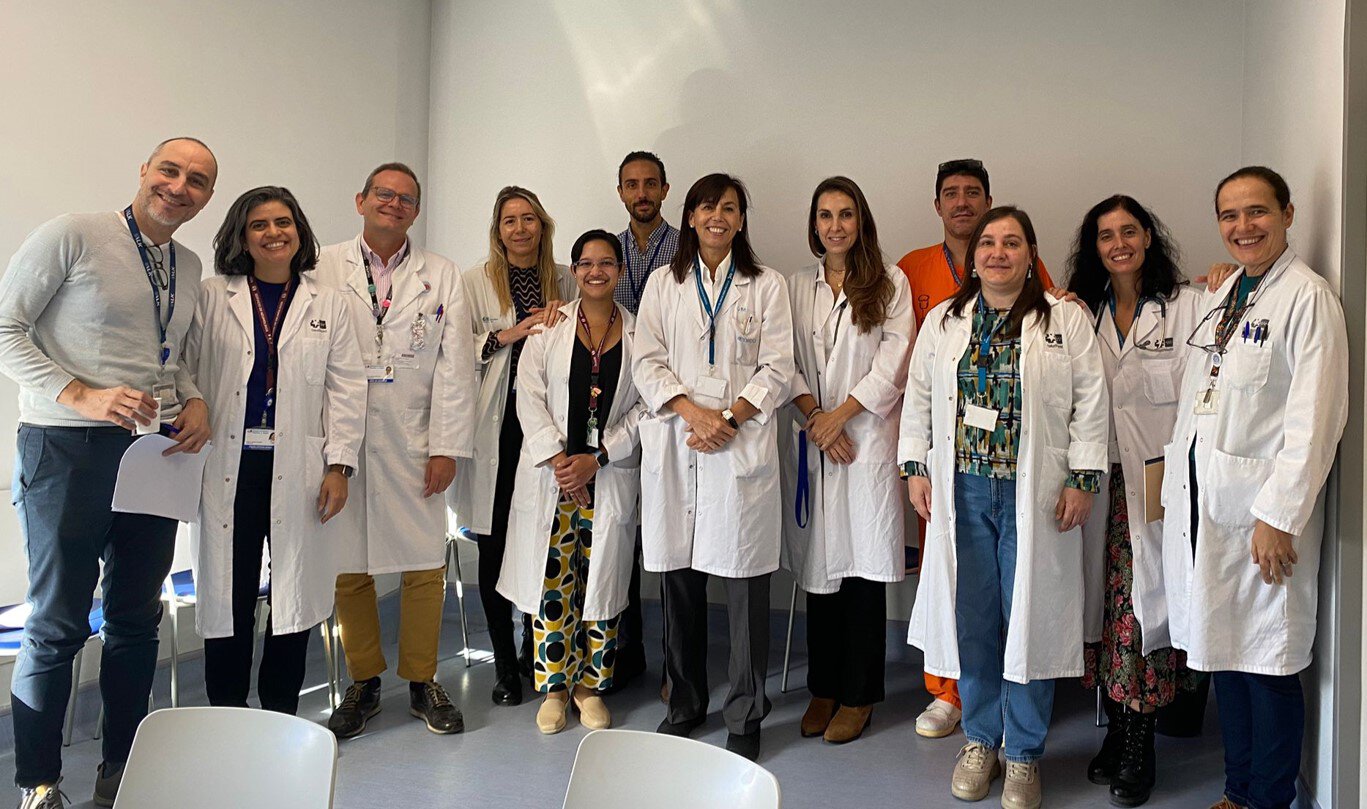
Collaborating Staff
- María Eugenia Olmedo García
- Yolanda Lage Alfranca
- Miguel García Pardo de Santayana
- Margaret Lario Martínez
- Alberto Cabañero Sánchez
- Rosa Mariela Mirambeaux Villalona
- Paola Lucía Arrieta Narváez
- Luis Gorospe Sarasúa
- José Javier Alarcón Rodríguez
- Patricia Paredes Rodriguez
- Gemma María Muñoz Molina
- Amparo Benito Berlinches
- Jesús Chamorro Pérez
- Natalia Isabel Torres Calcines
- Isabel Lourdes Hernández Pérez
- Beatriz Samper Pérez
Strategic objectives
- Validate predictive biomarkers to identify individuals with a higher probability of responding to lung cancer treatment.
- Integrate knowledge derived from microbiota studies to develop new prognostic and predictive biomarkers.
- Develop in vitro and in vivo models from patient samples to test new therapeutic strategies.
- Promote the applicability of the group's research and the validation of its findings to translate results into clinical practice.
- Strengthen collaboration with leading national and international research teams through joint projects in our group's areas of interest.
Research lines
- Identification of novel molecular biomarkers for diagnostic, prognostic, and predictive purposes, with a focus on immunotherapy and the gut microbiota in lung cancer.
- Impact of gender as a predictor of treatment efficacy and toxicity in lung cancer patients, particularly in the field of gut microbiota.
- Identification, validation, and implementation of blood biomarkers, including circulating tumor DNA, in lung cancer.
- Development of personalized and precision medicine in oncology to increase the efficacy of current therapeutic strategies.
- Impact of radon gas on molecular alterations in lung cancer.
- Impact of cardiac and respiratory comorbidities on lung cancer.
Location
Ramón y Cajal University Hospital
Medical Oncology Department
Floor -2, Right
Keywords
Non-small cell lung cancer, small cell lung cancer, lung adenocarcinoma, biomarkers, liquid biopsy, microbiota, gender, radon, physical exercise, radiomics, cardiotoxicity