González-Cucharero C, Hernández I, Díez J, Ramírez R, Saura M, Baéz C, Vázquez F, Sánchez FM, Zamorano JL, Crisóstomo V, Zaragoza C. A Novel Minimally Invasive Porcine Model of Functional Tricuspid Regurgitation
J Cardiovasc Dev Dis. 2026
"Bringing Functional Tricuspid Regurgitation Closer to Translational Research" - Claudia González Cucharero & Dr. Carlos Zaragoza Sánchez
Summary:
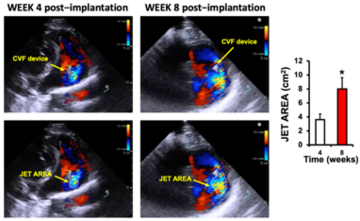
Tricuspid regurgitation (TR) is a prevalent cardiovascular disorder with significant clinical impact. TR is frequently silent and underdiagnosed and is estimated to impact over 70 million people globally. Characterized by retrograde blood flow from the right ventricle into the right atrium due to incomplete valve closure, TR leads to right heart dilation, systemic congestion, and eventually right-sided heart failure. Importantly, TR may contribute to the onset of atrial fibrillation (AF), the most common sustained arrhythmia, affecting approximately 59 million individuals worldwide. Despite its growing clinical importance, the pathophysiology of TR remains incompletely understood, and current animal models of TR, based on direct valve manipulation, limit translational applicability. We present a novel, minimally invasive porcine model of TR established via femoral/jugular vein catheterization with deployment of an inferior vena cava (IVC) filter. The filter partially impedes tricuspid valve closure, inducing TR without valvular injury. Validation was achieved through multimodal imaging, including fluoroscopy, echocardiography, and electrocardiography, confirming hallmark features of TR, including right atrial and ventricular enlargement and arrhythmic activity. This model provides a reproducible, minimally invasive platform for studying selected features of TR progression. Its minimally invasive nature and preservation of native valvular structure make it a useful preclinical platform for mechanistic and translational research.
Why do you highligth this publication?
This publication is particularly representative because it provides a clinically relevant and translational approach to studying functional tricuspid regurgitation, a condition that remains substantially underexplored despite its growing impact on cardiovascular health. Beyond the development of the model itself, the study enables future investigation into disease progression, right heart remodeling, and arrhythmogenic mechanisms associated with TR. By establishing a reproducible and minimally invasive experimental platform, this work helps bridge important gaps between preclinical research and the development of emerging therapeutic strategies. In addition, the preservation of the native valvular structure increases its physiological and translational relevance compared with traditional surgical models, making it a valuable tool for future cardiovascular research.
Publication commented by:
Claudia González Cucharero & Dr. Carlos Zaragoza Sánchez
CARDIOVASCULAR DISEASES. IRYCIS