Lasunción MA, Gómez-Coronado D, de la Peña G, Martín-Sánchez C, Jiménez-Juliana M, Martínez-Botas J, Busto R, Martínez-Jiménez MI. Inhibition of PrimPol by mevalonate pyrophosphate: A metabolic link between genome integrity and cytokinesis?
Biochim Biophys Acta Mol Cell Res. 2026
"Mevalonate diphosphate is a signal that synchronises cholesterol biosynthesis with DNA replication during the cell cycle" - Dr Miguel Á. Lasunción Ripa & Dr Diego Gómez-Coronado Cáceres
Summary
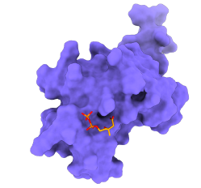
Cholesterol and certain precursors are essential for cell division, which is consistent with the activation of cholesterol biosynthesis in preparation for cell proliferation. Inhibition of diphosphomevalonate decarboxylase by fluoromevalonate, which accumulates mevalonate diphosphate, prevents proliferation by arresting the cells in S phase. These effects were accompanied by an increase in γH2AX and activation of the ATR-Chk1 pathway, suggesting the induction of replicative stress. Administration of mevalonate to fluoromevalonate-treated cells accelerated the inhibition of cell proliferation. In contrast, blockade of mevalonate synthesis with lovastatin arrested cells primarily in G2/M and no DNA damage occurred. Addition of lovastatin to cells treated with fluoromevalonate prevented γH2AX formation and allowed cells to reach mitosis, whereas mevalonate supplementation counteracted these effects, thus indicating the involvement of mevalonate or its phosphates in replication stress. Given the essential role of PrimPol in replication stress recovery, the effects of these metabolites on PrimPol activities were studied. We found that mevalonate diphosphate, but not mevalonate, inhibits both primase and polymerase activities of PrimPol, with a pronounced effect on primer synthesis by interfering with the formation of the initiating dimer. Competition assays and molecular modelling suggested that Mev-PP may interact with the Zinc-finger domain of PrimPol, potentially interfering with binding of the initiating nucleotide. These results allow to propose that mevalonate diphosphate accumulation contributes to the retention of stalled forks by inhibiting PrimPol re-priming activity, and suggest a novel connection between mevalonate-pathway metabolites and the replicative stress response.
Why do you highligth this publication?
The accumulation of mevalonate diphosphate, through the inhibition of PrimPol, impairs the replication stress response, thereby altering proper DNA duplication and preventing the cell from entering mitosis. These findings provide further evidence of the close link between cholesterol metabolism and cell division.
Publication commented by:
Dr Miguel A. Lasunción Ripa and Dr Diego Gómez-Coronado Cáceres
IRYCIS Emeritus Research & CLINICAL AND APPLIED LIPIDOMICS FOR METABOLISM RESEARCH. IRYCIS